Prioritizing quality sleep is one of the highest-leverage daily habits you can engage in for your health.
After all, it’s the only part of the day that we have the opportunity to reset and restore our physiological functioning.
Plenty can deplete our body and disrupt ideal sleep patterns, including artificial light, noise, air pollution, long work hours/shift work, fast food/sugar on-the-go, substance use, medication side effects, and excessive blue light exposure/screen time.
We pay for such exposures with shortened, poor quality sleeps and reduced immune resilience. Research shows that ongoing poor sleep, and its ability to increase inflammation, contributes to greater risk of cardiovascular disease, coronary heart disease, diabetes, hypertension, metabolic syndrome, and obesity, among others.
Daily efforts to support our 24-hour circadian rhythm result in a more optimal state of both physical and psychological health, as our sleep quality is more than just our bed time, wake time, and how many hours we’ve slept. All of our habits throughout the day add up!
Let’s look at the bigger picture of sleep…where can we start making some positive shifts?

5 PILLARS OF HIGH-QUALITY SLEEP
DAYTIME HABITS
Establishing a rhythm with our daily habits means predictability.
Which of the following habits, and strengthening its presence in your life, is a first point of focus for you?
- Sufficient hydration
- Predictable meal timing
- Meal composition (protein + fibre + fat)
- Ingredient sourcing (mainly whole foods)
- Eating enough at mealtime
- Daily physical activity
- Nervous System supports (screen/brain breaks, time outdoors, etc.)
Note: Blood sugar balance and sleep quality are connected. When cortisol (stress hormone) spikes, blood sugar levels become dysregulated, and vice versa. Balance blood sugar levels with sufficient protein, fibre and fat, moving after eating, and making intentional decisions that offset stressors.
SLEEP HYGIENE
A sleep routine (the 60-90 min. prior to bedtime), signals to our body, mind and hormones that the day is done and we’re winding down.
Can this be technology-free time? Continued blue light exposure following sundown keeps cortisol elevated, suppressing the rise of melatonin (sleep hormone).
Enjoy calming activities, instead! Read, spend time with a pet/children, take a walk, do some gentle stretching, soak in Epsom salts, journal, or sip on herbal tea.
CONSISTENCY
Your circadian rhythm – the rise/fall of cortisol and melatonin throughout the day – loves consistency!
Adopting a similar bedtime and wake-time throughout the week, including on weekends, strengthens hormonal rhythm.
ENVIRONMENT
Consider a gently-cool temperature (e.g. +18C), as a drop in your body’s core temperature helps trigger the onset of sleep.
Rely on earplugs, a noise machine, or a humming air purifier if needed, to ensure a quiet, relaxing space.
LIGHT EXPOSURE
Light is the impetus of your internal body clock and hormonal rhythm. Cortisol peaks early in the day as the sun rises/you wake, whereas melatonin rises in the late evening hours, inducing sleep and keeping you asleep.
Consider:
- Ambient lighting at sundown
- ‘Night Shift’ setting on your personal device
- Room-darkening blinds/curtains or a sleep mask made of a breathable, natural fibre
- Natural daylight into your eyes ASAP, upon waking
Sleep quality is interconnected with all physiological systems of the body. Factors including your digestive, liver, cardiovascular, and hormonal health (including Nervous System/blood sugar management), all contribute!
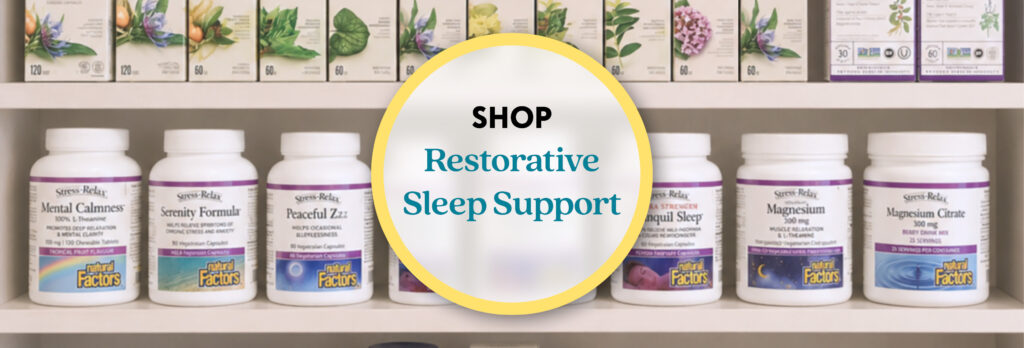
NATURAL SUPPLEMENTATION
*Please do your due diligence in researching which forms of natural supplementation may be supportive of YOUR personal medical history/current health journey.
MAGNESIUM
Forms to Consider
- Bis-Glycinate
- Research links increased consumption with improved sleep quality, reduced daytime sleepiness, falling asleep more quickly and longer sleep duration
- Glycine lowers body temperature, supports relaxation/deep sleep, and interacts with key neurotransmitter systems
- L-Threonate
- Superior absorption by the brain – crosses the Blood-Brain Barrier (BBB)
- Helps regulate Gamma-aminobutyric acid (GABA), a neurotransmitter that induces relaxation and calms our Nervous System
- Supports reduced anxiety and stress, alongside improved mood, memory and cognition
- Sulfate
- Epsom salts – enjoy a muscle-relaxing, therapeutic bath!
- Magnesium-rich foods
- Artichoke, avocado, banana, dark/leafy greens, dark chocolate, legumes, nuts/seeds, potato w/ skin, (wild-caught) fatty fish, (organic) soy, whole grains…
MELATONIN
- A key hormone involved with regulating our sleep-wake cycle
- Levels rise and peak in response to darkness, as body temperature drops
- Research links its deficiency as being partially responsible for sleep disorders
Forms to Consider
- Plant-based (phytomelatonin) or synthetic sourcing
- Phytomelatonin sourcing: typically chlorella, alfalfa or rice
- Higher antioxidant nutrient content
- Melatonin-containing foods
- Tart cherries/juice, kiwi, nuts/seeds (e.g. almonds, walnuts), dried cranberry, pistachio, egg, fatty fish, milk, Goji berries, tomato, grapes…
TART CHERRY JUICE (CONCENTRATE)
- A rich source of melatonin
- Research shows its capable of increasing (urinary) melatonin levels, improving sleep duration, efficiency and quality in healthy adults navigating interrupted sleep patterns
Forms to Consider
- Juice concentrate, capsule or soft gel
L-THEANINE
- A (non-protein-based) amino acid found in the leaves of the Camellia sinensis (tea) plant
- Crosses the Blood-Brain Barrier once absorbed into the bloodstream, increasing neurotransmitter levels (e.g. GABA, glutamine, serotonin)
- Research links it to reduced cortisol levels, heart rate and blood pressure, reducing stress and enhancing relaxation
Forms to Consider
- Capsule, chewable tablet or soft gel
- Naturally occurring in particular teas (e.g. green, matcha, black)
ADAPTOGENIC HERBS
- Sourced from non-toxic plants and ‘medicinal’ mushrooms
- Capable of regulating our Hypothalamic-Pituitary-Adrenal (HPA) Axis and our stress response
- Modulate cortisol levels by increasing our energy levels or calming our Nervous System
ASHWAGANDHA (Withania somnifera)
- Research trials and participant reporting link it to alleviated stress and anxious thoughts, reduced blood cortisol levels/increased blood serotonin levels, and improved focus, memory and psychological well-being
LEMON BALM (Melissa officinalis L.)
- Contains antioxidant-rich, plant compounds that support brain-based pathways and their communication (e.g. GABA-related pathways), inducing relaxation and a calming effect
- Helps regulate the HPA Axis and provides neuroprotective effects
Forms to Consider
- Capsule, gel cap, or tincture (most concentrated)
Additional options include Astragalus. Holy Basil, Ginseng, Lemon Balm, Licorice Root, Rhodiola and Schisandra.
GABA
- A neurotransmitter linked to heart rate response, development of stress, anxious thoughts and sleep disorders
- A randomized, double-blind, placebo-controlled, clinical trial showed that supplementation (90 days @ 200mg daily), has positive effects on heart rate variability, emotional responses, sleep efficiency and depression
Forms to Consider
- Capsule, chewable tablet or liposomal
NUTRIENTS INDIRECTLY SUPPORTIVE OF QUALITY SLEEP
OMEGA-3 FATTY ACIDS
- As estrogen plummets during perimenopause and menopause, HPA Axis and serotonin-related functions can dysregulate, triggering hot flashes, night sweats and interrupting sleep
- Omega-3s are proven to improve these symptoms
Forms to Consider
- Soft gels or liquid (third party, purity-tested options)
- Supplementation includes varying proportions of DHA (docosahexaenoic acid) and EPA (eicosapentaenoic acid) – both are important!
- Exist in their most directly usable food form in oily, fatty, wild-caught fish
VITAMIN D3
- Involved in producing Melatonin
- A balance between gaining enough Vitamin D and supporting the circumstances necessary for the rise of melatonin at night is important
Forms to Consider
- Soft gels or liquid drops (combined with Vitamin K2)
ZINC
- Supports the production and metabolism of key neurotransmitters, like GABA
- Helps produce melatonin, thereby increasing its levels
- Contributes to strong immune system function, improving sleep!
Forms to Consider
- Chelated forms, like picolinate or bisglycinate (capsule)
- Zinc-rich foods
- Raw pumpkin seeds, oysters, egg, meat, fish/seafood…
*As zinc exists in delicate balance with copper in the body, please discuss any zinc supplementation (dosing/duration of use) with your practitioner, proceeding accordingly.
THE PATH FORWARD
A stable, rhythmic schedule is your single biggest lever for upleveling your sleep quality. Intentional health-building actions, compounded over time, set us up for sleep success. Sweet dreams!
About the Author
Jessica Ferguson (Pecush) is a Natural Nutrition Clinical Practitioner based in Calgary, Alberta.
Her 2-decade journey with autoimmune disorder Ulcerative Colitis ultimately led her into the world of Holistic Nutrition with a deep-dive focus on gut health and autoimmunity, given ALL symptoms and disorders in the body stem from the health and functioning of the gut!
Through her (online-based) private practice (Jessica Pecush Nutrition), Jessica supports others with redefining their future health trajectory. Her therapeutic, anti-inflammatory approach encompasses a personalized whole foods-based diet, high-impact natural supplementation, calming lifestyle/stress management practices, restorative sleep strategies and of course, a growth mindset!
Jessica deeply empowers you with a sustainable, root cause-supportive approach for long-term vitality, rather than band-aid solutions that just temporarily mask symptoms.
SOURCES
Clinical Efficacy and Tolerability of Lemon Balm (Melissa officinalis L.) in Psychological Well-Being: A Review
Effect of tart cherry juice (Prunus cerasus) on melatonin levels and enhanced sleep quality
Effects of Omega-3 Polyunsaturated Fatty Acids Intake on Vasomotor Symptoms, Sleep Quality and Depression in Postmenopausal Women: A Systematic Review
Effects of zinc supplementation on sleep quality in humans: A systematic review of randomized controlled trials
GABA Supplementation, Increased Heart-Rate Variability, Emotional Response, Sleep Efficiency and Reduced Depression in Sedentary Overweight Women Undergoing Physical Exercise: Placebo-Controlled, Randomized Clinical Trial
Health Benefits of Docosahexaenoic Acid (DHA)
Magnesium Bisglycinate Supplementation in Healthy Adults Reporting Poor Sleep: A Randomized, Placebo-Controlled Trial
Magnesium-L-threonate improves sleep quality and daytime functioning in adults with self-reported sleep problems: A randomized controlled trial
Melatonin in sleep disorders
Omega-3 Polyunsaturated Fatty Acids and Their Health Benefits
Sleep, circadian rhythm, and gut microbiota
The effects of L-theanine consumption on sleep outcomes: A systematic review and meta-analysis
The Potential of Phytomelatonin as a Nutraceutical
Vitamin D and Sleep Regulation: Is there a Role for Vitamin D?